
Why Sleep Is Part of Your Fitness Routine (Not Just a Bonus)
Sleep is part of your fitness routine, not a bonus you get to if everything else goes right. It affects your hunger hormones, your cortisol levels, and whether your body can actually recover and get stronger from your workouts. If you're training consistently and eating well but still feeling stuck, your sleep is one of the first places worth looking.
This is something I don't talk about enough, and honestly, I think most coaches skip over it entirely.
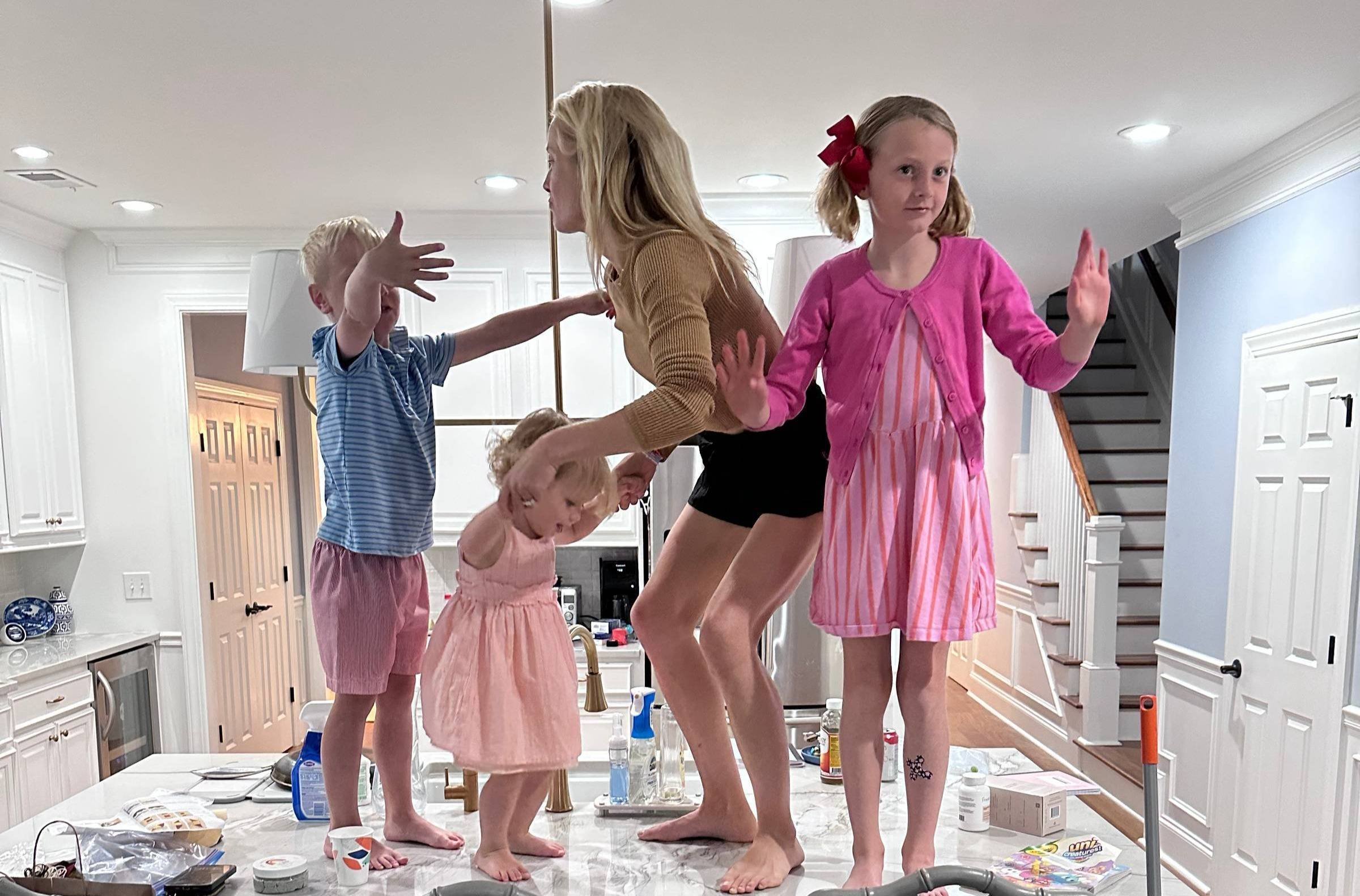
I know that's a hard thing to hear when you're a mom and uninterrupted sleep feels like a distant memory. I'm not here to tell you to just sleep more, because I know it's not always that simple. But I do want to walk you through what's actually happening in your body when sleep is consistently poor, because it matters more than most women realize.
WHAT POOR SLEEP DOES TO YOUR HUNGER HORMONES
When you don't sleep well, your hunger hormones shift in a very specific way. Ghrelin, the hormone that signals hunger, goes up. Leptin, the hormone that signals fullness, goes down. That means you're hungrier, less satisfied after eating, and your willpower around food is genuinely working against a physiological tide.
This is not a discipline problem. It's biology. If you've ever felt like your appetite was completely out of your control after a bad night of sleep, that's because it was.
WHAT POOR SLEEP DOES TO CORTISOL AND FAT STORAGE
Poor sleep also raises cortisol, your primary stress hormone. Elevated cortisol tells your body to hold onto fat, particularly around your midsection, and to break down muscle for fuel instead of using it efficiently. So even if you're training consistently and eating in a way that should support progress, your body is working against the adaptation you're trying to create.
This is often the missing piece for women who feel like they're doing everything right but still not seeing the changes they expect.
WHY RECOVERY HAPPENS DURING SLEEP, NOT DURING WORKOUT
Here's something worth sitting with: the actual process of getting stronger happens while you sleep, not during the workout itself. The workout is the stimulus. It's the signal to your body that says something needs to adapt. But the adaptation, the muscle repair, the strength gains, the recovery, all of that happens during rest.
So if your sleep is consistently poor, you're giving your body the stimulus without giving it the time it needs to actually respond to that stimulus.
A GUT CHECK WORTH ASKING
If you're doing everything right and still feeling stuck, it's worth asking honestly: how is my sleep?
Not perfect. Not eight hours every night. Just honestly, how is it, and where might there be room to support it a little better.
A FEW THINGS THAT HELP MORE THAN PEOPLE EXPECT
None of these are revolutionary, but they're the quiet, unglamorous habits that make everything else work better:
Keep your protein high throughout the day so your blood sugar stays more stable overnight.
Limit screens in the hour before bed.
Get outside for natural light in the morning, which helps regulate your circadian rhythm.
Be thoughtful about workout timing if evening training tends to wire you up before bed.
None of this requires an overhaul. It requires attention.
IF THIS IS A SEASON-OF-LIFE THING
If sleep deprivation is a season-of-life thing right now and you're doing your best, I see you. We work around reality in my programs, not against it. That means building plans that make sense for where you actually are, not where a textbook says you should be.
If you're ready to work with a plan built around your real life,
